

Download Fortinet FCSS_SDW_AR-7.4 Mock Test Study Material
FCSS_SDW_AR-7.4 Questions Prepare with Learning Information
NEW QUESTION # 22
Refer to the exhibit. Which statement best describe the role of the ADVPN device in handling traffic?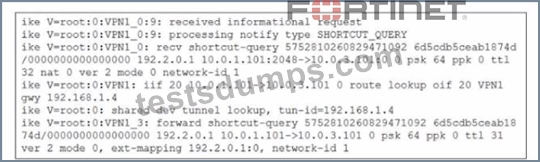
- A. This is a hub in a dual-region topology. The remote hub tunnel ID is 10.0.2.101.
- B. This is a spoke that has received a shortcut query from another spoke and has forwarded the response to its hub.
- C. This is a hub that has received a query from a spoke and has forwarded it to another spoke.
- D. This is a spoke. The kernel received a shortcut request and forwards the query to another spoke.
Answer: B
NEW QUESTION # 23
Refer to the exhibit. The administrator configured the IPsec tunnel VPN1 on a FortiGate device with the parameters shown in exhibit.
Based on the configuration, which three conclusions can you draw about the characteristics and requirements of the VPN tunnel? (Choose three.)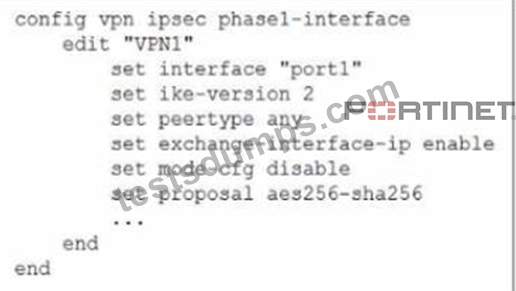
- A. The tunnel interface IP address on the spoke side is provided by the hub.
- B. The remote end must support IKEv2.
- C. The remote end can be a third-party IPsec device.
- D. The administrator must manually assign the tunnel interface IP address on the hub side
- E. This configuration allows user-defined overlay IP addresses.
Answer: C,D,E
NEW QUESTION # 24
Refer to the exhibit.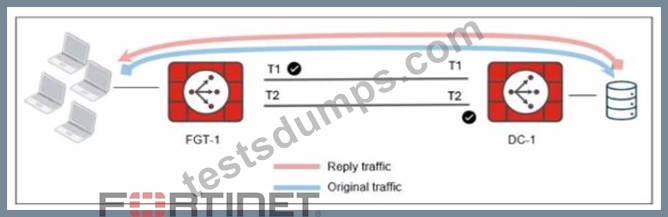
The administrator analyzed the traffic between a branch FortiGate and the server located in the data center, and noticed the behavior shown in the diagram.
When the LAN clients located behind FGT1 establish a session to a server behind DC-1, the administrator observes that, on DC-1, the reply traffic is routed overT2. even though T1 is the preferred member in the matching SD-WAN rule.
What can the administrator do to instruct DC-1 to route the reply traffic through the member with the best performance?
- A. Enable auxiliary-session under config system settings.
- B. Enable snat-route-change under config system global.
- C. Enable reply-session under config system sdwan.
- D. FortiGate route lookup for reply traffic only considers routes over the original ingress interface.
Answer: A
NEW QUESTION # 25
Refer to the exhibits. The exhibits show the configuration for SD-WAN performance. SD-WAN rule, the application IDs of Facebook and YouTube along with the firewall policy configuration and the underlay zone status. Which two statements are true about the health and performance of SD-WAN members 3 and 4? (Choose two.)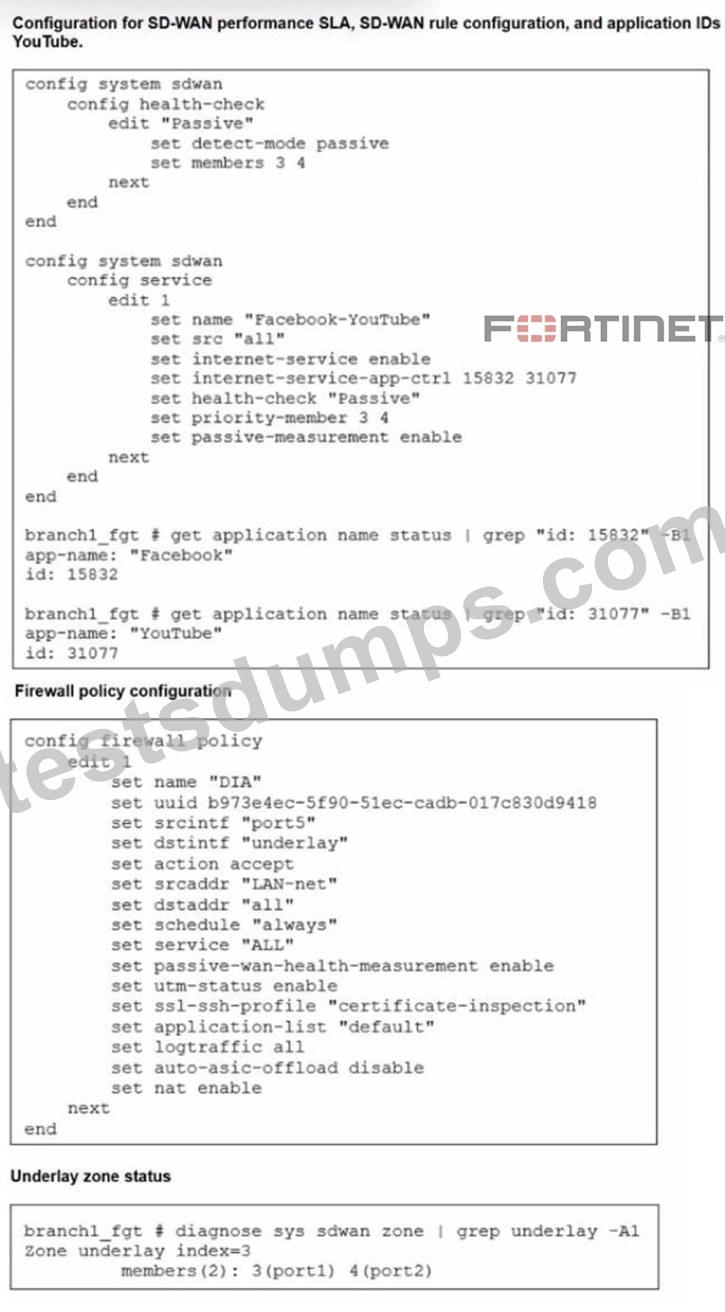
- A. The performance is an average of the metrics measured for Facebook and YouTube traffic passing through the member.
- B. FortiGate identifies the member as dead when there is no Facebook and YouTube traffic passing through the member.
- C. Encrypted traffic is not used for the performance measurement.
- D. Only related TCP traffic is used for performance measurement.
Answer: A,D
NEW QUESTION # 26
Which two statements are correct when traffic matches the implicit SD-WAN rule? (Choose two.)
- A. Traffic is load balanced using the algorithm set for the v4-ecmp-mode setting.
- B. Traffic does not match any of the entries in the policy route table.
- C. The session information output displays no SD-WAN-specific details.
- D. All SD-WAN rules have the default and gateway setting enabled.
Answer: B,C
NEW QUESTION # 27
Refer to the exhibits.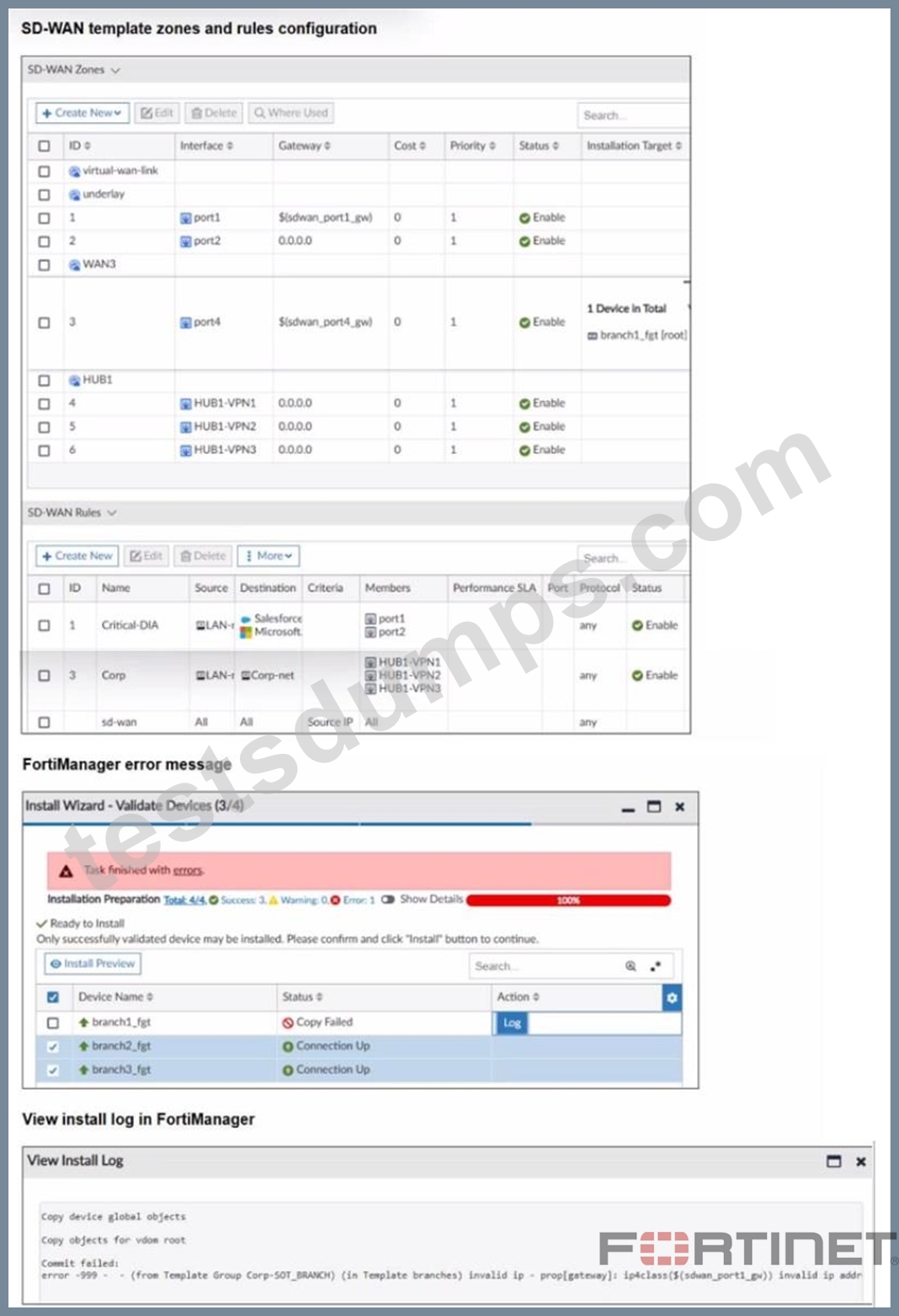
You use FortiManager to configure SD-WAN on three branch devices.
When you install the device settings. FortiManager prompts you with the error "Copy Failed" for the device branch1_fat When you click the log button. FortiManager displays the message shown in the exhibit.
- A. Gateways for all members in a zone must be defined the same way. Specify the gateway of the SD-WAN member port! without metadata variables.
- B. Based on the exhibits, which statement best describes the issue and how you can resolve it?
- C. Remove the installation target for the SD-WAN member port4. You cannot combine metadata variable and installation targets.
- D. Check the connection between branch1_fgt and FortiManager
- E. Check the metadata variable definitions, and review the per-device mapping configuration.
Answer: B
NEW QUESTION # 28
Refer to the exhibits. The exhibits show the source NAT (SNAT) global setting. port2 interface settings, and the routing table on FortiGate.
The administrator increases the member priority on port2 to 20. Upon configuration changes and the receipt of new packets, which two actions does FortiGate perform on existing sessions established over port2? (Choose two.)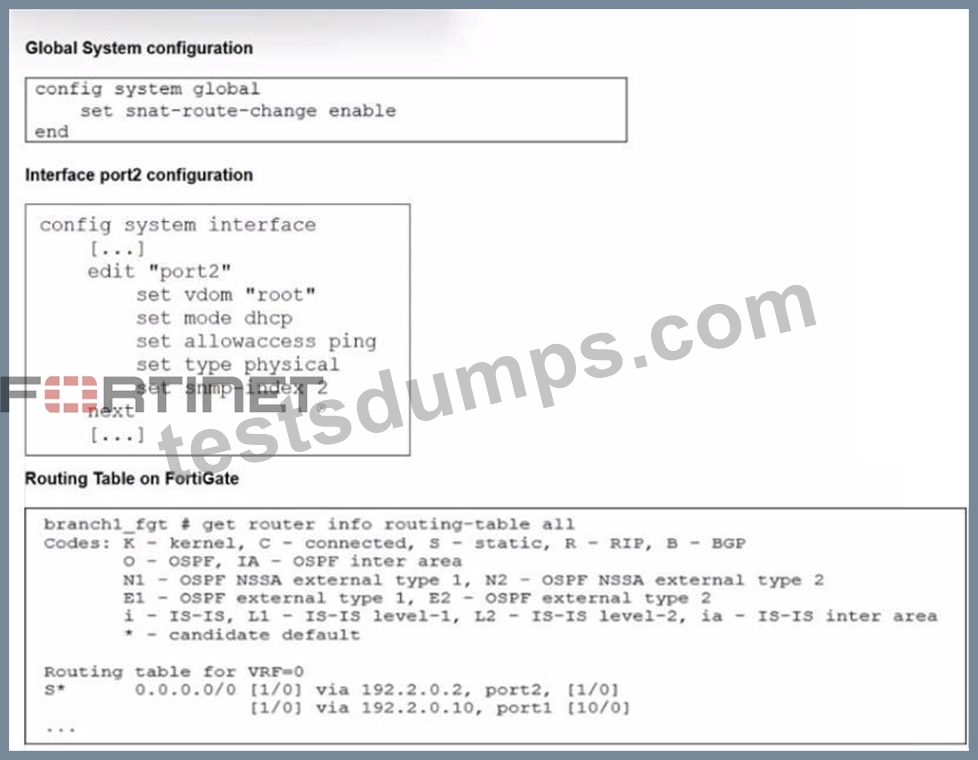
- A. FortiGate continues routing all existing sessions over port2.
- B. FortiGate flags the SNAT session as dirty only if the administrator has assigned an IP pool to the firewall policies with NAT.
- C. FortiGate flags the sessions as dirty.
- D. FortiGate updates the gateway information of the sessions with SNAT so that they use port1 instead of port2.
- E. FortiGate routes only new sessions over port2.
Answer: C,D
NEW QUESTION # 29
When you use the command diagnose sys session list, how do you identify the sessions that correspond to traffic steered according to SD-WAN rules?
- A. You cannot identify SD-WAN sessions. You must use the sdwar. session filter.
- B. You identify sessions steered according to SD-WAN rules with the flag vwl.
- C. You identify sessions steered according to SD-WAN rules with the data 3dwan_service_id.
- D. You identify sessions steered according to SD-WAN rules with the data vwl_mbr_seq.
Answer: C
NEW QUESTION # 30
Refer to the exhibit, which shows an SD-WAN zone configuration on the FortiGate GUI. What can you conclude about the zone and member configuration on this device?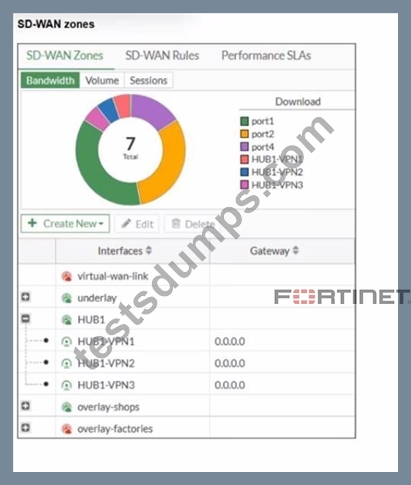
- A. You can move HUB1-VPN3 from the HUB1 zone to the overlay-shops zone.
- B. You can delete the virtual-wan-link zones.
- C. The underlay zone contains three members.
- D. The overlay-factories zone contains no member.
Answer: D
NEW QUESTION # 31
Refer to the exhibit. Which action will FortiGate take if it detects SD-WAN members as dead?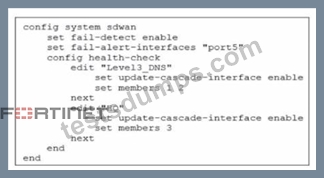
- A. FortiGate sends alert messages through poft5 when it detects all SD-WAN members as dead.
- B. FortiGate brings down port5 after it detects all SD-WAN members as dead.
- C. FoftiGate bounces port5 after it detects all SD-WAN members as dead.
- D. FortiGate fails over to the secondary device after it detects port5 as dead.
Answer: B
NEW QUESTION # 32
Exhibit.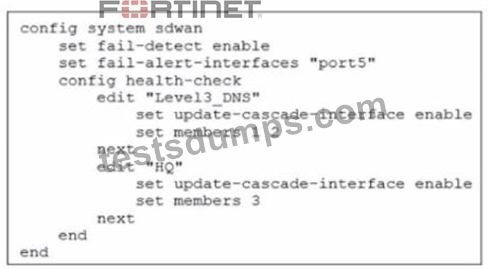
Which action will FortiGate take if it detects SD-WAN members as dead?
- A. FortiGate brings down port5 after it detects all SD-WAN members as dead.
- B. FoftiGate bounces port5 after it detects all SD-WAN members as dead.
- C. FortiGate sends alert messages through poft5 when it detects all SD-WAN members as dead
- D. FortiGate fails over to the secondary device after it detects port5 as dead.
Answer: A
NEW QUESTION # 33
The SD-WAN overlay template helps to prepare SD-WAN deployments. To complete the tasks performed by the SD-WAN overlay template, the administrator must perform some post-run tasks.
What are two mandatory post-run tasks that must be performed? (Choose two.)
- A. Configure SD-WAN rules
- B. Assign a hub id metadata variable to each hub device.
- C. Configure routing through the overlay tunnels created by the SD-WAN overlay template.
- D. Create policy packages and assign them to the branch devices.
- E. Assign an sdwan_id metadata variable to each device (branch and hub)
Answer: A,D
NEW QUESTION # 34
You have a FortiGate configuration with three user-defined SD-WAN zones and two members in each of these zones. One SD-WAN member is no longer in use in health-check and SD-WAN rules. You want to delete it.
What happens if you delete the SD-WAN member from the FortiGate GUI?
- A. FodiGate accepts the deletion and removes routes as required.
- B. FortiGate accepts the deletion and places the member in the default SD-WAN zone.
- C. FortiGate displays an error message. You must use the CLI to delete an SD-WAN member.
- D. FortiGate displays an error message. SD-WAN zones must contain at least two members
Answer: C
NEW QUESTION # 35
Refer to the exhibit.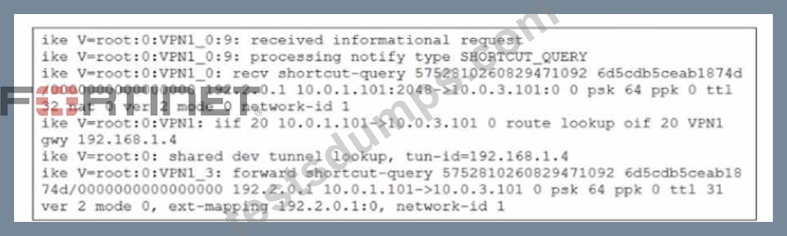
Which statement best describe the role of the ADVPN device in handling traffic?
- A. This is a hub in a dual-region topology. The remote hub tunnel ID is 10.0.2.101.
- B. This is a spoke that has received a shortcut query from another spoke and has forwarded the response to its hub.
- C. This is a hub that has received a query from a spoke and has forwarded it to another spoke.
- D. This is a spoke. The kernel received a shortcut request and forwards the query to another spoke.
Answer: B
NEW QUESTION # 36
Refer to the exhibit.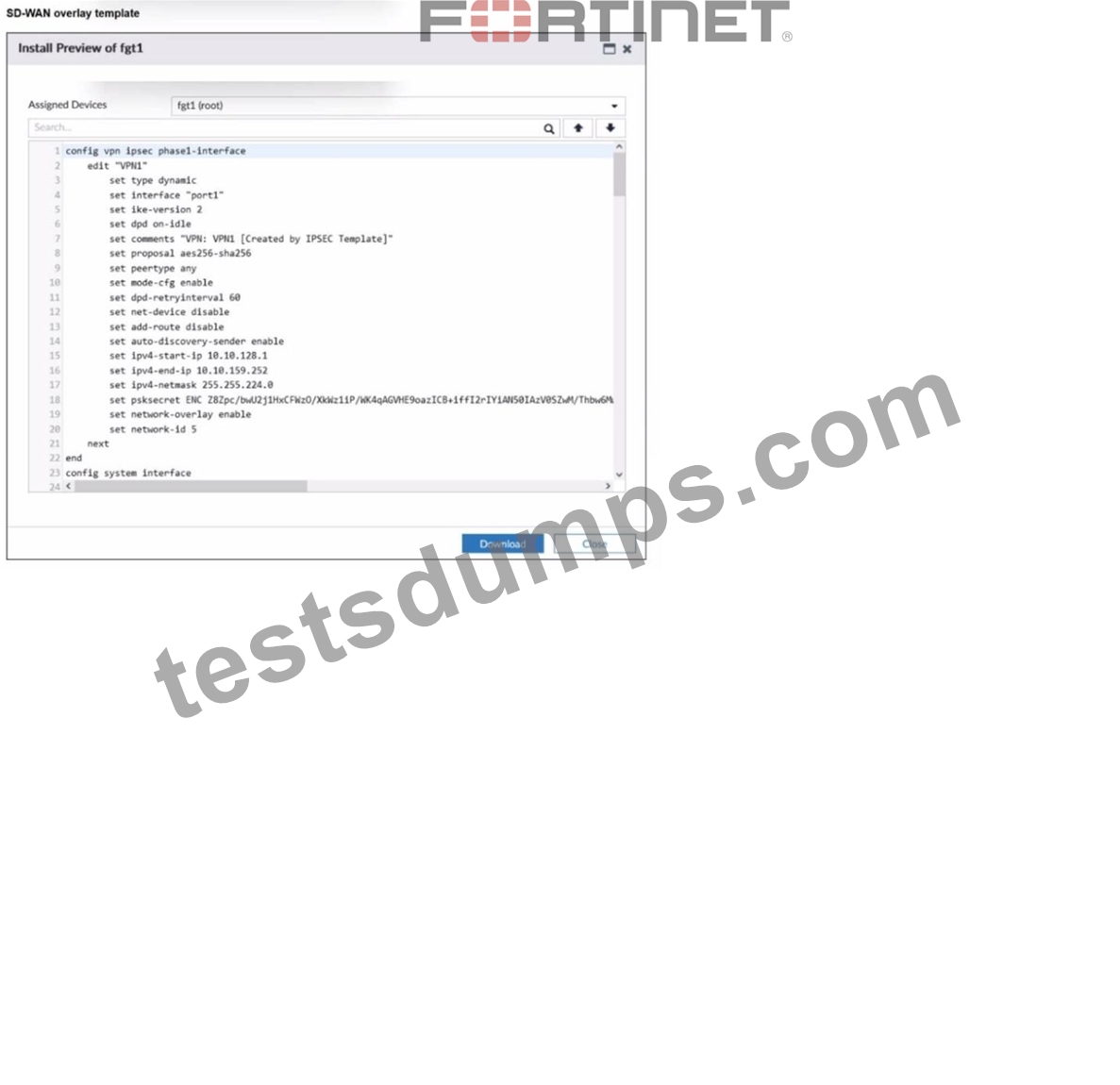
The administrator used the SD-WAN overlay template to prepare an IPsec tunnels configuration for a hub-and-spoke SD-WAN topology. The exhibit shows the FortiManager installation preview for one FortiGate device.
Based on the exhibit, which statement best describes the configuration applied to the FortiGate device?
- A. It is a hub device. It can send ADVPN shortcut offers.
- B. It is a spoke device that establishes dynamic IPsec tunnels to the hub. The local subnet range is 10.10.128.0/23.
- C. It is a spoke device that establishes dynamic IPsec tunnels to the hub It can send ADVPN shortcut requests.
- D. It is a hub device. It will automatically discover the spoke devices and add them to the SD-WAN topology.
Answer: A
NEW QUESTION # 37
SD-WAN interacts with many other FortiGate features. Some of them are required to allow SD-WAN to steer the traffic.
Which three configuration elements that you must configure before FortiGate can steer traffic according to SD-WAN rules? (Choose three.)
- A. Traffic shaping
- B. Routing
- C. Firewall policies
- D. Interfaces
- E. Security profiles
Answer: B,C,D
NEW QUESTION # 38
Refer to the exhibit.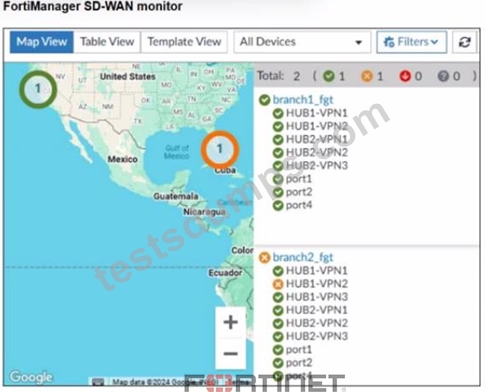
An administrator checks the status of an SD-WAN topology using the FortiManager SD-WAN monitor menus. All members are configured with one or two SLAs.
Which two conclusions can you draw from the output shown? (Choose two.)
- A. One member of branch2_fgt is missing the SLAs.
- B. This SD-WAN topology contains only two branch devices.
- C. branch2_fgt establishes six tunnels to the hubs and they are all up.
- D. The template view should be used to see the hub devices.
Answer: A,B
NEW QUESTION # 39
Within the context of SD-WAN, what does SIA correspond to?
- A. Local Breakout
- B. Secure Internet Authorization
- C. Software Internet Access
- D. Remote Breakout
Answer: D
NEW QUESTION # 40
The SD-WAN overlay template helps to prepare SD-WAN deployments. To complete the tasks performed by the SD-WAN overlay template, the administrator must perform some post-run tasks.
What are three mandatory post-run tasks that must be performed? (Choose three.)
- A. Configure SD-WAN rules.
- B. Assign an sdwan_id metadata variable to each device (branch and hub).
- C. Configure routing through overlay tunnels created by the SD-WAN overlay template.
- D. Create policy packages for branch devices.
- E. Assign a branch_id metadata variable to each branch device.
Answer: A,C,E
NEW QUESTION # 41
You are tasked with configuring ADVPN 2.0 on an SD-WAN topology already configured for ADVPN. What should you do to implement ADVPN 2.0 in this scenario?
- A. Delete the existing ADVPN configuration and configure ADVPN 2.0.
- B. Update the IPsec tunnel configuration on the branches.
- C. Update the IPsec tunnel configurations on the hub.
- D. Update the SD-WAN configuration on the branches.
Answer: D
NEW QUESTION # 42
......
Most Reliable Fortinet FCSS_SDW_AR-7.4 Training Materials: https://www.testsdumps.com/FCSS_SDW_AR-7.4_real-exam-dumps.html
Practice Material for FCSS_SDW_AR-7.4 Exam Question Preparation: https://drive.google.com/open?id=1iBxML_adqaG7Hm3aFrxuIVfSC3u0uF0I
